Liquid Plate vs. Immersion Cooling: Which Thermal Management Method Wins for BESS Safety?
Views: 15 Author: Site Editor Publish Time: 2026-01-07 Origin: Site
When comparing thermal management for Battery Energy Storage Systems (BESS), immersion cooling offers superior safety performance, particularly in preventing thermal runaway, compared to traditional liquid plate cooling. While liquid plates are a mature and cost-effective solution for general heat dissipation, immersion cooling's direct-contact method provides unparalleled temperature uniformity and a critical, built-in fire suppression capability. This article delves into a detailed comparison of these two critical technologies, evaluating their impact on safety, performance, longevity, and total cost of ownership.
The Critical Role of Thermal Management in BESS Safety
A Battery Energy Storage System (BESS) is a finely balanced electrochemical powerhouse. Its ability to store vast amounts of energy is also its greatest vulnerability. Efficiently managed heat doesn't just reduce performance; it is the primary line of defense for the safety and reliability of the entire system.
What is Thermal Runaway and Why is it the Ultimate BESS Hazard?
Thermal runaway is a devastating chain reaction that begins when a single battery cell overheats. If this heat cannot be dissipated quickly enough, the temperature spirals upwards, causing the cell to vent flammable gases and catch fire. The intense heat then radiates to neighbors, triggering them as well. This propagation can destroy an entire BESS container in minutes.
A Closer Look at Liquid Plate Cooling: The Established Standard
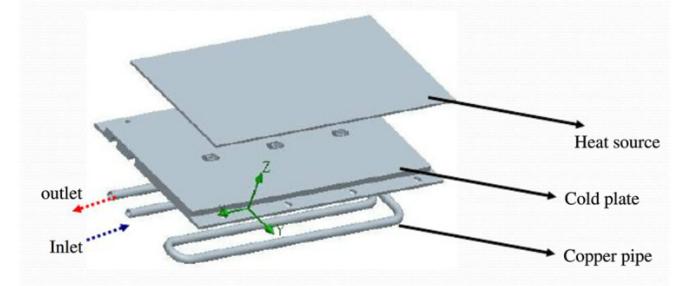
Liquid plate cooling, often called indirect liquid cooling, is currently the most common technology used in BESS. It uses a liquid coolant to draw heat away through metal plates.
How Does Liquid Plate Cooling Work?
Metal plates with internal channels are placed in thermal contact with battery modules. A coolant (water-glycol) is pumped through these plates. Heat conducts from the cell, through the thermal interface material (TIM), and into the plate. This is an indirect method because the coolant never touches the cells.
Limitations and Safety Concerns with Liquid Plates
Inefficient Mitigation: Indirect plates are poorly positioned to absorb sudden, intense internal heat during a runaway event.
Temperature Gradients: Cooling is only applied to the surface, creating "hot spots" furthest from the plate.
Leakage Risk: A water-based leak inside a high-voltage enclosure can cause short circuits.
Immersion Cooling: The Next-Generation Contender
Immersion cooling submerges battery cells directly into a specialized, non-conductive (dielectric) liquid, eliminating thermal barriers.
The Principle of Direct-Contact Immersion Cooling
Battery modules are placed in a sealed enclosure filled with dielectric fluid. The fluid absorbs heat from every surface of every cell simultaneously. It is then circulated to a heat exchanger and returned to the tank.
Head-to-Head Comparison: Liquid Plate vs. Immersion Cooling
Feature
Liquid Plate Cooling
Immersion Cooling
Runaway Mitigation
Poor to Fair (Indirect/Slow)
Excellent (Proactive/Isolation)
Temp Uniformity
Fair (Gradients present)
Excellent (Minimal ΔT)
Heat Transfer
Moderate (Multiple layers)
Very High (Direct contact)
Initial Cost (CAPEX)
Lower (Mature/Standard)
Higher (Specialized fluids/seals)
Battery Lifespan
Standard
Extended (Superior temp control)
The Verdict: Which Cooling Method is Right for Your BESS?
For Maximum Safety and Performance:Immersion cooling is the superior choice. It is ideal for utility-scale, data centers, or high-density urban installations where failure propagation must be prevented.
For Cost-Sensitive, Lower-Density Applications:Liquid plate cooling remains a viable option. It is a mature and cost-effective solution for residential or small commercial systems where risk profiles are lower.
Frequently Asked Questions (FAQ)
Can immersion cooling stop thermal runaway? It cannot stop an initial internal cell defect, but it is highly effective at absorbing the energy burst to stop propagation to adjacent cells.
Is immersion cooling significantly more expensive? Upfront costs (CAPEX) are higher, but the extended battery lifespan can lead to a lower Total Cost of Ownership (TCO) over time.
Tell Me About Your Project Any questions about your project can consult us, we will reply you within 12 hours, thank you!
Leave a Message
Guangdong Winshare Thermal Technology Co,Ltd. Founded in 2009 focused on high-power cooling solutions for the development, production and technical services, committed to becoming a new energy field thermal management leader for the mission.