When selecting the ideal joining process for high-performance liquid cold plates, the choice often narrows down to two advanced manufacturing techniques: Vacuum Brazing and Friction Stir Welding (FSW). Friction Stir Welding (FSW) is frequently the superior choice for modern, high-reliability, all-aluminum liquid cold plates due to its solid-state process that creates a stronger, void-free, and more durable metallurgical bond. However, Vacuum Brazing remains an indispensable and powerful method for applications demanding intricate internal fin structures or the joining of dissimilar materials, such as aluminum to copper. The ultimate "winner" is not absolute but is determined by the specific priorities of your application, including thermal performance, pressure requirements, design complexity, and cost.
What is a Liquid Cold Plate and Why is the Joining Process Critical?
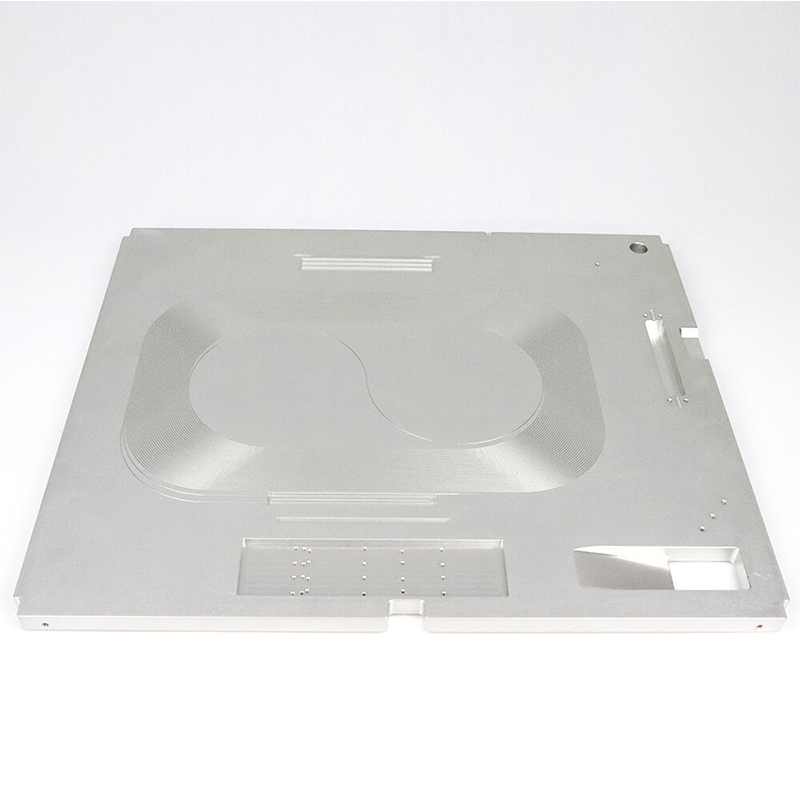
A liquid cold plate is a high-performance thermal management device designed to dissipate significant heat loads from power electronics, lasers, batteries, and other high-density components. It functions by circulating a coolant (typically a water-glycol mixture) through internal channels, absorbing heat from the component mounted on its surface, and transferring it away. A typical cold plate consists of a base plate, internal fins or structures to increase the surface area for heat transfer, and a lid. The method used to join these pieces together is not a minor detail—it is fundamental to the cold plate's performance, reliability, and lifespan.
The joining process directly impacts three critical factors. First is thermal performance; any voids, gaps, or low-conductivity filler material at the joint interface can create thermal resistance, impeding heat flow from the device to the coolant. Second is mechanical integrity and reliability; the joint must be strong enough to withstand operating pressures, thermal cycling, and mechanical vibration without failing. A leak is a catastrophic failure that can destroy the electronics being cooled. Third is design freedom; the manufacturing process can either enable or restrict the complexity of the internal channels, which in turn dictates the cooling efficiency.
Understanding the Contenders: A Deep Dive
To make an informed choice, it's essential to understand how each process works, including its inherent advantages and disadvantages.
What is Vacuum Brazing? The Time-Tested Method
Vacuum brazing is a high-temperature joining process that uses a filler metal (braze alloy) to create a bond between two or more base metal components. The entire assembly, along with the filler metal, is placed in a vacuum furnace. For aluminum cold plates, a thin sheet of aluminum-silicon eutectic alloy is often used as the filler metal, either as a separate foil or clad directly onto the base material.
Advantages:
Excellent for creating highly complex internal geometries (e.g., dense fin fields).
Allows for joining of dissimilar materials (e.g., aluminum and copper).
Produces clean, flux-free joints due to the vacuum environment.
Disadvantages:
The high temperatures can anneal and soften the base material.
Risk of "braze run-out" (excess filler) blocking channels.
Thermal resistance at the joint due to filler metal properties.
What is Friction Stir Welding (FSW)? The Solid-State Innovator
Friction Stir Welding is a revolutionary solid-state joining process, meaning the metal is not melted to create the weld. A non-consumable, rotating tool generates intense, localized heat, plasticizing the metal. As the tool traverses along the joint line, it mechanically "stirs" the softened material together, creating a fine-grained, forged, and fully consolidated weld. The result is a monolithic structure.
Advantages:
Creates a metallurgically superior, void-free joint stronger than the base material.
Extremely high reliability and virtually zero leak risk.
No filler material means no added thermal resistance.
Low heat input results in minimal distortion and a smaller heat-affected zone.
Disadvantages:
Best suited for linear or gently curved joints.
Requires rigid clamping and specialized machinery.
Leaves an entry/exit hole that must be plugged.
Head-to-Head Comparison: Vacuum Brazing vs. FSW
| Feature | Vacuum Brazing | Friction Stir Welding (FSW) |
| Joint Integrity | Good. Dependent on filler metal; susceptible to voids. | Exceptional. Forged, homogenous, and void-free. |
| Reliability | Good. Non-zero risk of micro-leaks over time. | Highest possible reliability. Virtually eliminates leak risk. |
| Thermal Path | Very good. Slight barrier from filler alloy. | Excellent. Continuous path, no filler used. |
| Design Flexibility | Unmatched. Joins complex multi-layer assemblies. | Limited. Best for simple paths and lid-to-base seals. |
| Dissimilar Metals | Excellent (e.g., Al to Cu). | Possible but challenging/less common. |
| Base Material Strength | Reduced (annealed by high temp). | Mostly preserved (lower heat input). |
Which Process Should You Choose? Application-Specific Scenarios
When Does Vacuum Brazing Shine?
Complex Internal Geometries: If your design requires dense, folded, or skived fin fields inside the cold plate, brazing is the only process that can bond these structures simultaneously.
Dissimilar Metals: If your application needs a copper base for spreading combined with an aluminum body for weight, vacuum brazing is the gold standard.
Multi-Layer Shapes: The batch nature of vacuum brazing handles unconventional, non-planar 3D shapes effectively.
When is Friction Stir Welding the Clear Winner?
Mission-Critical Reliability: For aerospace, medical, or high-power laser equipment where a leak would be catastrophic.
High-Pressure Environments: The forged strength of FSW joints handles high coolant pressures or spikes far better.
Extreme Fatigue Resistance: In electric vehicle (EV) battery packs subject to high vibration and thermal cycling.
The Future of Cold Plate Manufacturing
As power densities increase, Friction Stir Welding is rapidly becoming the preferred method for next-generation, all-aluminum liquid cold plates, particularly in the booming EV and data center markets. However, vacuum brazing remains vital for niche, highly complex applications. We are also seeing a rise in hybrid approaches where FSW creates the main seal while internal structures are attached via other advanced methods.
Conclusion: Making the Final Decision for Your Thermal Solution
The decision hinges on a simple trade-off analysis:
Choose Vacuum Brazing when your design prioritizes geometric complexity and material flexibility. Choose Friction Stir Welding (FSW) when your design prioritizes ultimate reliability, mechanical strength, and consistent thermal performance.
[Back to Top]
Keywords: Vacuum Brazing, Friction Stir Welding, FSW, Liquid Cold Plates, Thermal Management, EV Battery Cooling, Data Center Cooling, High-Performance Cooling, Aluminum Cold Plates.