AI Cooling vs Traditional Cooling: Which Performs Better for High-Density Computing?
When designing data centers for advanced machine learning, utilizing outdated thermal infrastructure guarantees severe performance bottlenecks. AI cooling systems perform significantly better than traditional cooling for high-density computing because they utilize targeted liquid cold plates to extract heat directly from extreme 20kW to 50kW+ rack loads, eliminating the localized hotspots and GPU throttling that standard ambient air cooling fundamentally cannot prevent.
As computational power scales, the conversation around data center infrastructure has fundamentally shifted. High-density computing requires more than just lowering the ambient room temperature; it demands precision thermal management at the silicon level. Facility managers and hardware engineers are realizing that traditional air-blown systems are approaching a hard physical wall. To understand why modern data centers are aggressively pivoting to advanced liquid architectures, we must analyze the data, examine real-world failure points, and evaluate what truly makes a system "AI-ready."
Table of Contents
1. Why is Traditional Air Cooling Failing in High-Density Computing?
2. What Makes AI Cooling Systems Fundamentally Different?
3. How Do Efficiency and Energy Consumption Compare?
4. Real-World Case: How Does Liquid Cooling Overcome GPU Throttling?
5. Are You Building a "Usable" System or an "AI-Ready" Cooling Solution?
6. How Does Future Scalability Impact Your Thermal Strategy?
7. How Can You Reduce Decision Uncertainty for Your Next Deployment?
1. Why is Traditional Air Cooling Failing in High-Density Computing?
The physical properties of air limit its capacity to absorb and transport extreme heat rapidly, making it an increasingly severe bottleneck for modern silicon.
Traditional air cooling fails in high-density environments because it was designed for standard 5 to 10 kW racks. As AI GPU clusters push rack densities to 20kW, 40kW, and beyond, air lacks the thermal mass required to prevent critical junction overheating.
For over two decades, data centers successfully utilized Computer Room Air Conditioning (CRAC) units and raised floors to push chilled air through server racks. This method works perfectly when the heat load is distributed evenly and remains relatively low. However, high-density computing cooling completely alters the math. A modern AI accelerator rack packs multiple high-wattage GPUs into a dense 4U chassis. When the thermal load exceeds 20kW per rack, the sheer volume of air required to maintain safe temperatures creates localized hurricane-force winds inside the aisle. Even at maximum fan speeds, air cooling struggles to penetrate the dense internal heat sinks of the servers, leading to a massive buildup of thermal resistance. The traditional method simply cannot scale to meet the raw physics of next-generation silicon.
2. What Makes AI Cooling Systems Fundamentally Different?
Instead of attempting to cool the entire server room environment, modern AI thermal management focuses on capturing heat precisely at the source before it escapes into the chassis.
AI cooling systems are fundamentally different because they prioritize "localized precise heat dissipation." By utilizing direct-to-chip liquid cooling, they target uneven heat distributions directly at the semiconductor die, ignoring ambient room temperatures to ensure the processor remains stable.
In an AI training scenario, workloads are rarely balanced. Certain GPUs may run at 100% utilization while others sit idle. Traditional cooling blasts cold air uniformly across the entire rack, wasting massive amounts of energy cooling idle components while simultaneously failing to provide enough cooling to the maxed-out processors.
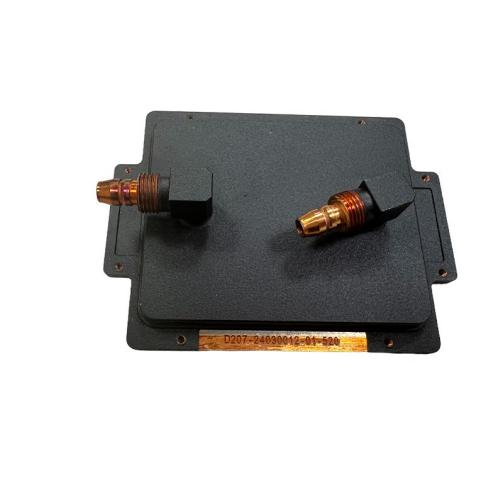
AI cooling systems, specifically liquid cooling for AI servers, operate on a direct-capture philosophy. Water or dielectric fluids have a heat capacity roughly 3,000 times greater than air. By routing these fluids through highly engineered microchannel cold plates directly mounted on the GPUs and CPUs, the system extracts the heat exactly where it is generated. This localized approach effortlessly handles severe, concentrated hot spots and ensures the silicon never reaches the thermal threshold that triggers defensive performance throttling.
3. How Do Efficiency and Energy Consumption Compare?
Beyond raw cooling performance, the shift to liquid-based AI cooling drastically alters the economic and environmental footprint of a data center.
Data shows that liquid cooling for AI servers increases heat exchange efficiency by 30% to 50% compared to air. Furthermore, it significantly optimizes Power Usage Effectiveness (PUE) by reducing overall cooling energy consumption by 20% to 40%.
Operating massive chiller plants and high-RPM server fans to force air through restrictive server chassis consumes a staggering amount of electricity. In many traditional data centers, up to 40% of the total facility power is dedicated solely to cooling equipment.
By transitioning to AI thermal management architectures, facilities drastically reduce their reliance on mechanical chillers and high-speed fans. Liquid cooling loops use efficient, low-speed pumps to move coolant, which requires a fraction of the kinetic energy of air fans. This leads to a massive reduction in the facility's PUE (Power Usage Effectiveness).
Performance and Data Comparison:
Metric | Traditional Air Cooling | AI-Ready Liquid Cooling |
Typical Rack Density Limits | $5$ kW – $10$ kW / rack | $20$ kW – $50$ kW+ / rack |
Heat Exchange Efficiency | Baseline | $+30\%$ to $+50\%$ improvement |
Cooling Energy Consumption | High (Massive fan/chiller power) | $20\%$ to $40\%$ reduction |
Space Utilization | Poor (Requires large hot/cold aisles) | Excellent (Dense server packing) |
Noise Levels | Extreme ($>85$ dB in aisles) | Significantly reduced |
Target Application | Enterprise storage, basic web hosting | Deep learning, LLM training, HPC |
4. Real-World Case: How Does Liquid Cooling Overcome GPU Throttling?
Theoretical data must translate to physical performance. When hardware hits a thermal wall, the financial cost of lost computational time is staggering.
In a recent AI server cluster deployment, switching from failing air cooling to liquid cold plates immediately eliminated severe localized hotspots, stopping continuous GPU throttling and allowing the cluster to achieve its maximum theoretical compute performance.
During the initial phase of a large-scale AI training deployment, a facility attempted to cool high-density racks using legacy CRAC systems. As the training models grew more complex, the continuous high-load operations exposed severe flaws. Localized hot spots formed deep within the server chassis. To protect themselves from melting, the GPUs automatically engaged thermal throttling—dropping their clock speeds to reduce heat output. This instability crippled the training schedule.
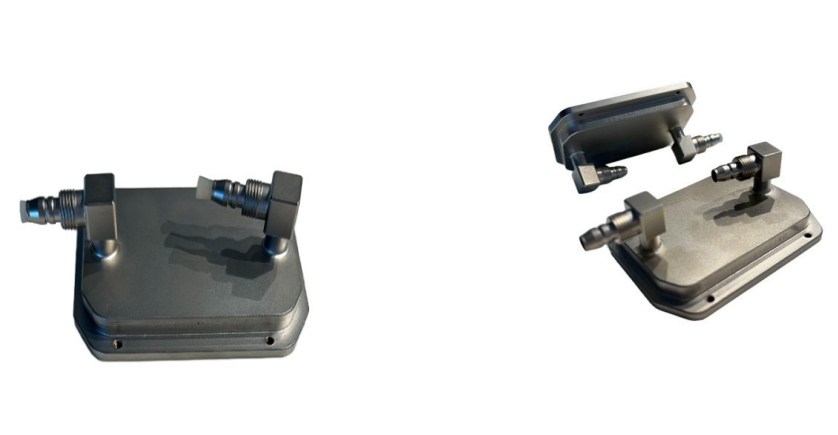
Upon evaluating the failure, the architecture was upgraded to utilize direct-to-chip liquid cold plates. The transformation was immediate. The liquid system extracted the intense localized heat with zero lag. Junction temperatures dropped and stabilized. Without the threat of overheating, the GPUs maintained their maximum boost clocks indefinitely. The core realization from this case is that advanced cooling is not just about preventing damage; it is about unlocking the stranded computational performance you have already paid for.
5. Are You Building a "Usable" System or an "AI-Ready" Cooling Solution?
There is a vast engineering gap between a system that merely keeps hardware from melting and a system engineered to sustain maximum AI performance continuously.
An AI-ready cooling solution requires comprehensive system engineering. It is not just about mounting a cold plate; it involves integrating advanced structural design, automated fluid control systems, and precise device adaptation to guarantee long-term high-load stability.
Many procurement teams make the mistake of evaluating high-density computing cooling through the lens of traditional data center standards. They look for "usable" parts rather than cohesive solutions. However, AI thermal management is a complex system engineering challenge. It requires meticulously balancing fluid dynamics, pressure drops, and material compatibility across the entire server rack.
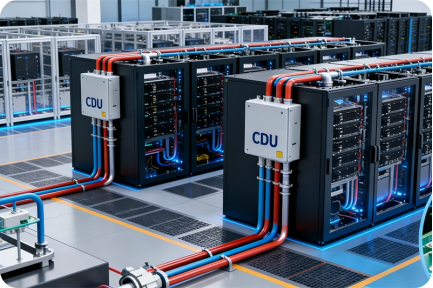
As an experienced provider of high-power thermal solutions, Winshare Thermal Technology understands that true AI-readiness requires deep integration. A robust system must feature intelligent control units that monitor coolant temperatures and flow rates in real-time, dynamically adjusting to the unequal heat distribution characteristic of neural network training. By focusing on the entire thermal loop—from the microchannels on the GPU to the facility coolant distribution unit (CDU)—we ensure the system provides the unyielding stability required for 24/7 AI workloads.
6. How Does Future Scalability Impact Your Thermal Strategy?
Installing a cooling system that barely meets today's thermal requirements guarantees massive, disruptive retrofit costs when the next generation of silicon arrives.
Future scalability requires deploying liquid cooling architectures that possess the headroom to support higher-density deployment without requiring full facility redesigns, thereby preventing long-term energy cost explosions as compute demands grow.
The thermal design power (TDP) of AI accelerators is not plateauing; it is accelerating. If your current cooling infrastructure is maxed out at 20kW per rack today, it will be obsolete within two hardware generation cycles. Relying on air cooling forces data centers to leave rack space empty (under-provisioning) just to maintain airflow, which destroys the return on investment (ROI) of expensive facility floor space.
Liquid cooling for AI servers inherently provides massive scalability. Because the fluid loop is highly efficient, upgrading to hotter, more powerful GPUs often only requires swapping the physical cold plates while retaining the existing facility piping and CDUs. This scalable approach allows operators to increase their compute density vertically within existing racks rather than expanding horizontally into new real estate.
7. How Can You Reduce Decision Uncertainty for Your Next Deployment?
Transitioning from familiar air cooling to advanced liquid architectures can seem risky, but delaying the transition carries the far greater risk of technological obsolescence.
To reduce decision uncertainty, you must rigorously audit your current thermal baseline. Evaluate if your existing cooling can sustain continuous high loads, quantify your current performance throttling losses, and consult with system-level thermal integration experts.
The most effective way to approach this transition is to stop viewing cooling as a facility overhead cost and start viewing it as a core performance enabler. Ask your engineering teams the difficult questions: Are our current ambient temperatures limiting our boost clocks? How much energy are we wasting on chassis fans? Do we have the infrastructure to deploy a 40kW rack tomorrow?
By systematically addressing these questions, the path forward becomes clear. Traditional methods are failing not due to poor design, but due to shifting physics. If your infrastructure is currently experiencing performance bottlenecks, we encourage you to engage with the engineering team at Winshare Thermal. By analyzing your specific rack densities and operational profiles, we can design a customized, AI-ready cooling solution that eliminates throttling, slashes energy consumption, and future-proofs your data center.
Conclusion
The debate between AI cooling systems and traditional cooling is effectively over in the realm of high-density computing. As rack densities blow past 20kW and aim for 50kW, ambient air cooling is physically incapable of capturing the concentrated heat flux generated by modern AI accelerators. Transitioning to advanced liquid cooling solutions is no longer an optional efficiency upgrade; it is a mandatory structural requirement to ensure system stability, optimize power consumption, and unlock the full computational potential of your hardware.
Frequently Asked Questions (FAQ)
1. What is the main difference between traditional cooling and AI cooling systems?
Traditional cooling uses ambient air to lower the temperature of an entire server room. AI cooling systems primarily use direct-to-chip liquid technologies to precisely extract extreme, localized heat directly from the components (like GPUs) before it enters the room.
2. At what rack density does traditional air cooling start to fail?
While highly optimized air cooling can sometimes be stretched, traditional air systems typically hit a severe efficiency wall and begin to fail when rack densities exceed 15kW to 20kW, leading to inevitable component hotspots.
3. What does "AI-ready cooling" actually mean?
An AI-ready cooling solution is a system engineered specifically for the extreme, uneven, and continuous high-load thermal profiles of machine learning hardware. It includes advanced structural cold plates, intelligent fluid control, and data monitoring to ensure absolute 24/7 stability.
4. How does liquid cooling improve AI server performance?
When GPUs overheat, they automatically "throttle" or slow down to prevent damage. Liquid cooling efficiently removes this heat, keeping junction temperatures well below the throttling threshold, allowing the GPUs to run at maximum speed continuously.
5. Is liquid cooling more expensive to operate than air cooling?
No. While the initial capital expenditure (CapEx) to install liquid cooling can be higher, operational expenditure (OpEx) is much lower. Liquid cooling reduces total cooling energy consumption by 20% to 40% by eliminating high-RPM fans and massive air chillers.
6. Can liquid cooling help future-proof a data center?
Yes. Liquid has a significantly higher heat capacity than air. A well-designed liquid cooling loop has the thermal headroom to support the next generation of hotter, higher-wattage chips without requiring a complete facility overhaul.
7. Is there a risk of liquid leaks in the data center?
While a concern, modern enterprise liquid cooling systems use vacuum brazed cold plates, aerospace-grade dripless quick disconnects, and negative pressure systems that immediately stop fluid flow if a pressure drop is detected, making them exceptionally safe for high-value environments.
 English