Introducing conductive liquids into high-density electronic environments is inherently risky. A single drop of coolant on a 1000W+ AI accelerator or an EV motor controller can cause catastrophic short circuits, leading to hundreds of thousands of dollars in hardware damage and system downtime.
When evaluating thermal management solutions, engineers often ask: Are brazed cold plates truly leak-proof? From an engineering perspective, vacuum brazed cold plates offer a "virtually leak-proof" structural advantage. However, relying solely on structure is dangerous. True reliability is not an absolute guarantee; it is a probability that is strictly minimized through design and rigorously validated through quantifiable testing. Let us break down the mechanical failure risks of liquid cooling, why brazed structures are superior, and the exact testing standards required to guarantee safety in high-stakes environments.
1. What Makes Vacuum Brazed Cold Plates Structurally Superior?
To understand why a cold plate might leak, you must look at how it is assembled. Traditional designs, such as embedded tube cold plates, rely on mechanically pressing copper tubes into an aluminum base, often using thermal epoxies or O-rings to secure the fit. These are mechanical joints and physical interfaces—inherent weak points.
Vacuum brazed cold plate reliability stems from a completely different manufacturing philosophy: the metallurgical bond. During the vacuum brazing process, multiple layers of CNC-machined aluminum or copper, along with internal fin structures, are heated in a vacuum furnace. A filler metal melts and fuses the components at the molecular level. The result is a single, continuous, fully metal-integrated structure.
● No Glue or Epoxy: Eliminates the risk of chemical degradation over time.
● No Mechanical Joints: Removes physical seams that can separate under stress.
● Full Seal Fluid Channels: The fluid path is entirely enclosed within a solid metal block, naturally withstanding high internal pressures.
Structurally, the leakage risk is virtually eliminated because the potential leakage paths simply do not exist.
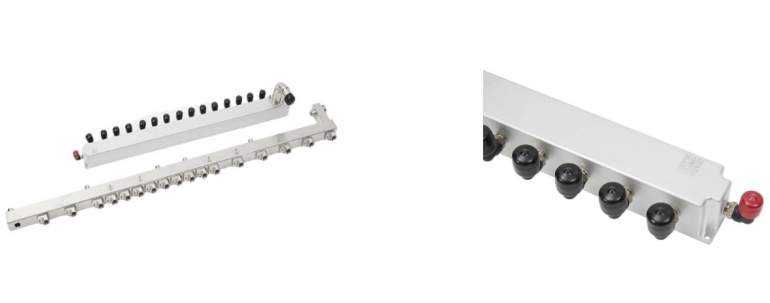
Manifold Vacuum Brazing
2. Common Liquid Cold Plate Failure Risks
Even with advanced manufacturing, engineers must design against the real-world operational stresses that lead to liquid cold plate failure risks. If a manufacturer’s quality control is poor, even a brazed plate can fail.
The three primary failure mechanisms include:
1. Thermal Cycling (Fatigue): In high-power electronics like IGBT modules, power ramps up and down rapidly. This causes the metal to expand and contract. In traditional plates, this CTE (Coefficient of Thermal Expansion) mismatch eventually cracks epoxies or degrades O-rings. A fully brazed plate expands and contracts as one single unit, drastically reducing fatigue failure.
2. Pressure Spikes and Water Hammer: High-density microchannels require high pump pressures to push the coolant through. Sudden changes in flow can create pressure spikes. A weak brazed joint (due to improper furnace temperature control) can fracture under this hydraulic stress.
3. Corrosion: If the coolant chemistry is incompatible with the cold plate material (e.g., using untreated water in an aluminum plate without corrosion inhibitors), internal pitting can eventually eat through the metal wall, causing a pinhole leak.
3. The Reality of "Leak-Proof": Verification Over Guarantees
In B2B industrial engineering, "leak-proof" is not a marketing buzzword; it is a quantifiable metric. A cold plate is only leak-proof if it passes stringent non-destructive testing (NDT) before it leaves the factory.
When procuring thermal solutions for high heat flux applications, you should not ask a manufacturer, "Will it leak?" Instead, the correct engineering question is: "What is your validated leak rate standard?"
At Winshare Thermal, we operate on the principle that structural integrity must be proven. We validate the metallurgical bond of every batch to ensure it meets strict industrial or aerospace-grade leakage standards, shifting the conversation from blind trust to verifiable data.
4. Cold Plate Leak Testing Methods: The Helium Standard
How do you prove a solid block of metal doesn't have a microscopic defect? You use a gas with an atomic radius smaller than almost any liquid molecule.
Helium mass spectrometry leak detection is the gold standard for validating cold plates. Because helium is inert and incredibly small, it can penetrate micro-porosities that water or glycol mixtures would initially bridge but eventually leak through under long-term pressure.
During a helium leak test cold plate validation, the plate is placed in a vacuum chamber and pressurized internally with helium. A highly sensitive mass spectrometer "sniffs" the vacuum chamber for any escaping helium atoms.
Comparison of Cold Plate Leak Testing Methods
Testing Method | Sensitivity | Primary Use Case | Defect Detection Capability |
Visual Inspection | Very Low | Basic assembly checks | Massive cracks, missing welds |
Water Bath (Bubble Test) | Low to Moderate (10⁻³ mbar·L/s) | Standard commercial electronics | Macro-leaks, failed O-rings |
Pressure Decay Test | Moderate (10⁻⁴ mbar·L/s) | High-volume automotive parts | Mid-sized porosities, structural integrity |
Helium Mass Spectrometry | Extremely High (10⁻⁶ to 10⁻⁸ mbar·L/s) | AI Servers, Medical, Space, EV | Micro-porosities, true "zero-leak" validation |
Note: For industrial applications (like EV and standard servers), a pass rate of ≤ 10⁻⁶ mbar·L/s is typically required. For extreme environments (aerospace, medical MRI), requirements can tighten to ≤ 10⁻⁸ mbar·L/s.
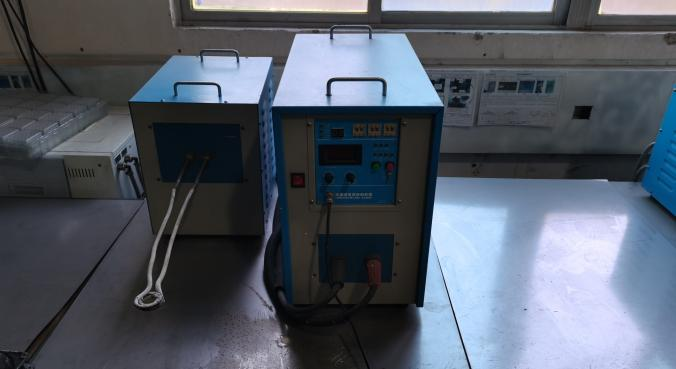
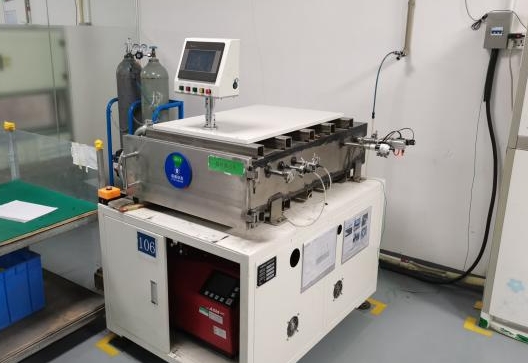
Helium Leak Test Machine
5. Case Study: Zero Leak Tolerance in AI Servers and HPC
Consider the cooling infrastructure required for High-Performance Computing (HPC) and AI GPU clusters. The demands are brutal:
● Extreme Heat Flux: Individual GPUs outputting 1000W+ continuously.
● Uptime: 24/7 operation with zero tolerance for maintenance shutdowns.
● Risk: A coolant leak onto a tightly packed server tray means catastrophic data and hardware loss.
Traditional air cooling cannot cover the hot spots, and embedded tube cold plates face thermal resistance bottlenecks and interface degradation.
By upgrading to vacuum brazed cold plates, data center architects solve both thermal and reliability issues simultaneously. The microchannel design maximizes surface area for rapid heat extraction, while the full metallurgical bond eliminates leakage paths. Before delivery, these plates undergo strict helium testing alongside pressure and flow validation. The engineering result is stable temperature control, higher power density capability, and long-term, leak-free operation.
Air Leaking Test
6. Securing EV, IGBT, and Medical Systems
The requirement for absolute fluid containment is not limited to data centers. The exact same vacuum brazing and helium testing protocols are mandatory for:
● EV Battery & Drivetrain Systems: Preventing conductive coolant from shorting high-voltage battery modules during the intense vibrations of daily driving.
● IGBT / High Power Converters: Managing the severe thermal cycling of wind turbine inverters without structural fatigue.
● Laser & Medical Equipment: Ensuring high-pressure chillers do not leak inside cleanrooms or sensitive MRI machines.
7. How to Specify Reliability for Your Next Project
A brazed cold plate is the most structurally sound liquid cooling solution available, virtually leak-proof by design. However, that reliability is only actualized through uncompromising quality control.
When specifying a cold plate for a high heat flux application, demand documentation. Partner with a manufacturer that inherently understands complex internal channel design and backs up their vacuum brazing process with comprehensive non-destructive testing.
At Winshare Thermal, our full metal bond cold plates are engineered to handle 1000W+ heat loads and are rigorously validated by helium mass spectrometry before delivery. Contact our engineering team today to discuss your specific pressure requirements and leak testing standards.
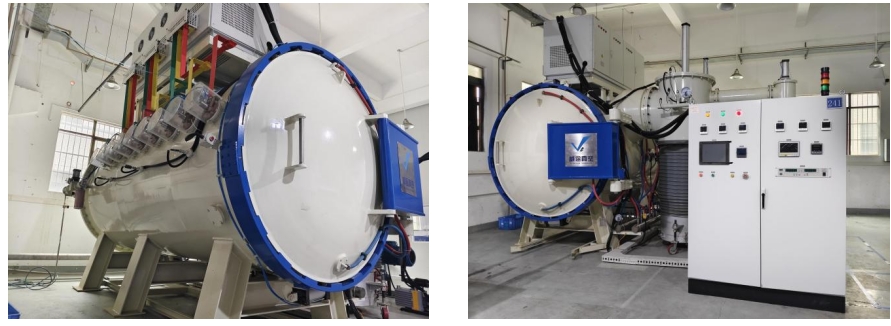
Our latest vacuum brazing equipment will enable us to achieve higher quality brazing of cold plates and offer an absolute advantage in production volume.
Frequently Asked Questions (FAQ)
1. Is any liquid cold plate 100% leak-proof?
Structurally, a flawless vacuum brazed cold plate is effectively 100% leak-proof because it is a single piece of continuous metal. However, in manufacturing, "100%" translates to passing a strict, quantifiable leak test (like Helium mass spectrometry) to verify that no microscopic manufacturing defects exist.
2. Why do embedded tube cold plates carry a higher leak risk?
Embedded tube designs rely on mechanically pressing tubes into a base plate and often use thermal epoxies to fill gaps. Over time, thermal cycling and pressure fluctuations can degrade these epoxies and mechanical joints, creating potential pathways for fluid to escape.
3. What exactly is a helium leak test for a cold plate?
It is a non-destructive testing (NDT) method where the cold plate is pressurized with helium gas inside a vacuum chamber. A mass spectrometer detects if any extremely small helium atoms escape through the metal, identifying micro-porosities that water testing would miss.
4. What leak rate standard is acceptable for AI servers and high-power electronics?
For mission-critical applications like AI GPU clusters and high-voltage EV controllers, a helium leak rate of ≤ 10⁻⁶ mbar·L/s is the standard industrial benchmark to ensure virtually zero risk of liquid escaping over the product's lifespan.
5. How does thermal cycling affect vacuum brazed cold plate reliability?
Because a brazed cold plate is fused into a single metallurgical unit, all parts of the plate expand and contract together at a unified rate. This eliminates the sheer stress and fatigue that normally destroys cold plates made from dissimilar materials glued together.
6. Can a brazed cold plate handle high-pressure coolants?
Yes. The vacuum brazing process creates incredibly strong joints. When designed with the correct wall thickness and internal support structures (like high-density fins), brazed plates can easily withstand the high internal pump pressures required for dense microchannel cooling.
 English