As a business-to-business heatsink buyer, you know that skiving is an important process in the production of heatsinks. But do you know what skiving is and why it's used?
In this complete guide to skived heatsinks, we'll explain everything you need to know about this manufacturing process, from what skiving is to the types of materials that can be used.
We'll also discuss how skiving affects the performance of your heatsinks and offer tips on choosing the right skived heatsink for your application.
So whether you're new to skived heatsinks or just looking to learn more, read on for all the information you need!
What is Skived Heatsink?
What is a Skived Heatsink?
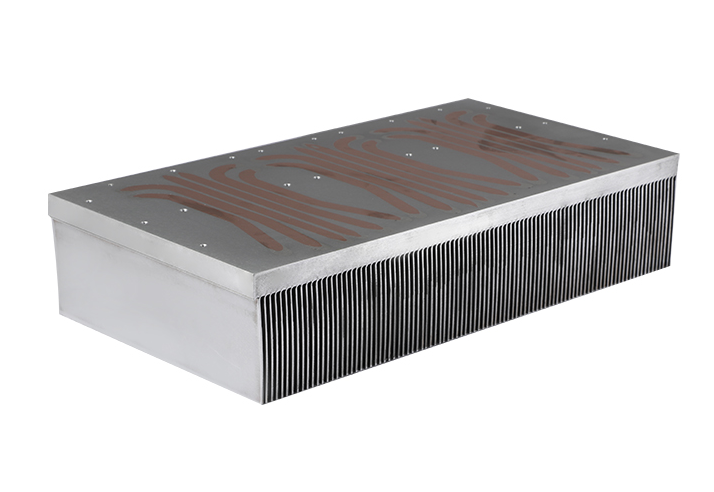
A skived fin heatsink is manufactured using a specialized semi-shearing process where precision-controlled blades slice and lift thin, vertical fins from a single solid block of raw aluminum or copper (bar stock or ingot).
Unlike bonded or soldered fin heat sinks, skiving involves zero material removal, welding, or bonding agents. The fins remain an un-severed, extension of the base plate, creating a true monolithic, single-piece metallic structure.
When designing a custom skived heat sink, several mechanical parameters critically dictate thermal efficiency:
Fin Thickness and Pitch (Density): Skiving allows for ultra-thin fins (down to 0.15mm) and tight pitches that are physically impossible to achieve via traditional aluminum extrusion.
Aspect Ratio: It can achieve extreme fin height-to-gap aspect ratios (up to 50:1), multiplying the effective surface area within a compact, space-constrained enclosure.
Zero Interfacial Thermal Resistance: Because the fins and the base are the exact same continuous piece of metal, there is absolutely no thermal interface resistance (Rth-tech), ensuring instantaneous transient heat spreading from the heat source to the fins.
Skived Heatsink Materials
· Aluminum
Aluminum is the most common material used in skived heatsinks.
It is a good choice for applications where weight and size are important considerations, as aluminum is light yet strong.
Additionally, aluminum has high thermal conductivity, meaning it can effectively remove heat from components. Skiving alters the thickness and smoothness of the aluminum sheet, which affects the heat sink's performance.
· Copper
Copper is another common material used in skived heatsinks. Copper is another common material used in skived heatsinks. Compared to Aluminum, it has higher thermal conductivity, making it ideal for heat-intensive applications.
Additionally, copper is corrosion-resistant and has a high melting point, making it a durable choice for long-term use. Skiving alters the thickness and smoothness of the copper sheet, which affects the heat sink's performance.
How Does Skived Fin Heat Sink Work?
The working mechanism of a Skived fin heat sink is quite simple.
The Skived fins are in direct contact with the component that needs to be cooled, and the airflow from a fan or blower passes over the fins, cooling them down.
This simple design allows Skived fin heat sinks to be used in various applications, from computers and telecommunications equipment to automotive and aerospace systems.
How to Identify a Skived Heatsink?
In the thermal hardware industry, skived fin heat sinks are easily distinguished from stamped or extruded alternatives by examining the fin root interface.
Because a micro-knife shaves the material directly from the base, you will observe a characteristic, uniform curved tool mark (radius) at the bottom junction where each fin stands up from the base plate.
Furthermore, unlike extruded heatsinks which feature perfectly straight, parallel lines from exit dies, skived fins exhibit a subtle, unidirectional surface texture on the fin faces resulting from the blade's shearing path. There are no weld lines, epoxy residues, or mechanical joints at the base, proving the assembly is an integrated, continuous piece of metal.
Features of Skived Heat Sink
Some of the features of Skived Heat Sink are:
· Skived fins are in direct contact with the component to be cooled.
· Airflow from a fan or blower passes over the fins, cooling them down.
· Skiving alters the thickness and smoothness of the metal sheet, which affects the heat sink's performance.
· Skived heatsinks are available in a variety of sizes and shapes.
· Skiving is used to create linear and curved shapes that can be combined to form more elaborate designs.
Benefits of Skived Heat Sinks
There are several benefits of Skived Heatsinks, including:
· Reduced size and weight compared to traditional heatsinks.
· The skiving heat sink can be mass-produced at a low cost and has a high production capacity, making it suitable for mass production.
· Skived Heat Sinks have enhanced airflow over the hot components, resulting in a better cooling solution.
· Advanced industrial skiving machinery can achieve fin heights up to 120mm, meeting the strict vertical space and thermal envelope requirements of high-power server chassis.
· A wide variety of sizes and shapes are available in Skived Heat Sinks to meet your specific needs.
· Easy installation and use- Skived Heatsinks can be used as a replacement for traditional heatsinks or as an accessory to enhance cooling. Skived Heat Sinks fit easily on most applications and require no additional hardware or accessories.
· Because the fins are shaved directly from the base block metal, the structural integrity remains uncompromised, eliminating the aging risks, joint degradation, or thermal efficiency degradation common in bonded fin setups.
· Skived fin heat sinks ensure greater heat dissipation area, improving heat dissipation performance.
· It is possible to make the skived fin heat sink lighter by making it thinner, generally 0.05 to 2.0mm
· There is a high level of compatibility when using a skived fin heat sink, and it can also be processed later. In addition, it can work in conjunction with buried copper pipes and other processes to improve heat dissipation.
Applications of Skived Heat Sinks
Skived Heat Sinks are used in various applications, from computers and telecommunications equipment to automotive and aerospace systems. Some specific applications include:
· Computer Systems: Skived Heatsinks are commonly used in laptop and desktop computers to cool the central processing unit (CPU) and graphics processing unit (GPU). They can also be used in data centers to cool the servers.
· Telecommunications Equipment: Skived Heatsinks are used in telecommunications equipment to cool the power amplifiers and transistors.
· Automotive Systems: Skived Heatsinks are used in automotive systems to cool the engine control unit (ECU), alternators, and other electronic components.
· Aerospace Systems: Skived Heatsinks are used in aircraft and space systems to cool the various components, including power supplies. Skived Heat Sinks also allow for increased airflow and more excellent aerodynamics.
· Industrial Equipment & Power Electronics: Skived heat sinks are heavily integrated into high-voltage variable frequency drives (VFDs), welding power supplies, high-capacity thyristors, and industrial motor controllers where compact footprint, passive reliability, and intense localized heat dissipation are required.
· Power Supplies: Skived heatsinks are often used in power supplies to help keep up with the ever-increasing demand for diverse power needs.
· LED Lighting: Skived Heatsinks are commonly used to dissipate the heat generated by LEDs, which is known for being a significant temperature problem. Skiving also aids in heat dissipation in LED lights by providing more surface area for airflow to pass over. Skiving also provides improved thermal performance when compared to traditional heatsinks because it connects the fins with any venting holes that may be present on the device. Skived Heat Sinks are also smaller and lighter than traditional heatsinks, making them ideal for use with small electronics.
· Medical Equipment: Skived Heat Sinks are used in medical equipment to cool the electronic components. They are also used in medical lasers to cool the diode. Skived Heat Sinks can also be used in medical monitors, scanners, and other diagnostic equipment to cool the electronic components.
Optimize Your Thermal Profile with Winshare’s Engineering Team
While skived fin heat sinks offer unmatched thermal density, their performance depends heavily on finding the right balance of knife entry angles, fin flatness, and airflow static pressure drop. Designing blindly can lead to excessive manufacturing costs or air bypass issues.
At Winshare Thermal, we leverage over 15 years of precision cold-forging, extrusion, and advanced skiving experience. Certified to IATF 16949, we support major global brands in automotive, AI computing, and energy storage.
Let us audit your design before you commit to production. Fill out the form below with your target dimensions, material preference (Copper vs. Aluminum), and maximum heat load.
Upload your 3D CAD (.STEP) files today, and our thermal engineering team will provide a complimentary Design for Manufacturing (DFM) analysis and a factory-direct quote within 24 hours.
 English